

 Facebook
 X
 Pinterest
 Copy Link
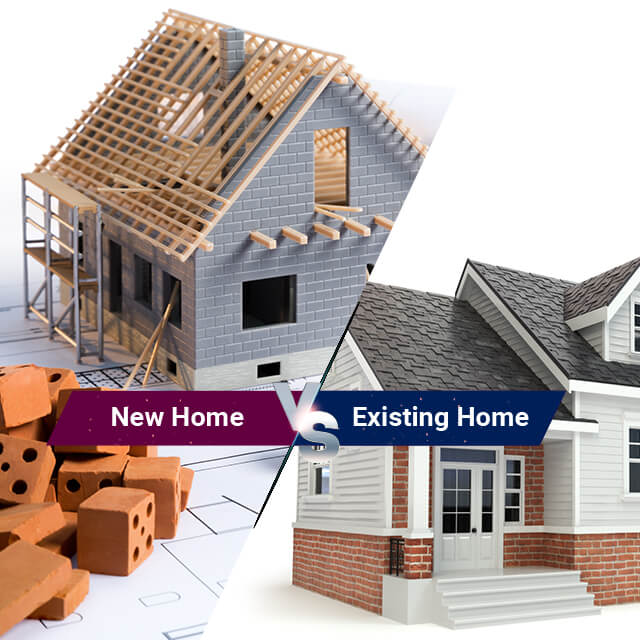
An October 2026 rental market analysis of newly constructed and existing single-family homes in Greater Houston.
When searching for a rental home in Houston, most people focus on three things: location, size, and monthly rent. But there’s another factor worth considering: the age of the property.
Would you rather rent a newly constructed home with modern finishes and updated appliances, or an existing home that may offer more space or a better location for the same price?
Many renters assume new construction automatically means higher rent. While that can be true, the difference might be smaller than you expect.
Across Greater Houston, particularly in growing communities such as Katy, Richmond, Cypress, and Fulshear, renters have access to both newly built homes and established properties.
So, how much more does it actually cost to rent a newly constructed home? And is the additional expense worth it?
To explore these questions, I analyzed 724 active single-family rental listings from the Houston Association of REALTORS® (HAR) Multiple Listing Service (MLS) in October 2026.
Here’s what the numbers reveal.
1. Why Should Houston Renters Consider New Construction?
When people think about new construction, they usually think about buying a brand-new house. However, newly constructed homes are also available for rent throughout Greater Houston.
Some are individually owned properties offered by private landlords. Others are part of professionally managed rental communities, sometimes called build-to-rent communities.
These homes may offer features such as:
- Modern kitchens and updated appliances.
- Contemporary, open-concept floor plans.
- Newer heating and cooling systems.
- Updated insulation and energy-efficient features.
- Modern bathrooms and interior finishes.
- Private yards, garages, or community amenities.
For renters who want the experience of living in a newer home without the financial commitment of purchasing one, new construction can be an attractive option.
However, these features vary by property, and newer doesn’t always mean better.
An established rental home may offer a larger yard, more square footage, or a location closer to work and everyday conveniences.
That’s why it’s important to evaluate what you’re actually getting for your monthly payment.
2. How Much Does New Construction Cost Compared With Existing Homes?
To understand the price difference, I examined active single-family rental listings across several Greater Houston communities.
The analysis included properties meeting the following criteria:
- Single-family homes available for rent.
- Three to four bedrooms.
- At least two full bathrooms.
- Active rental listings in October 2026.
- Properties classified by HAR MLS as either new construction or existing homes.
A total of 724 properties were included, consisting of 50 new construction homes and 674 existing homes.
Average Monthly Rent: New Construction vs. Existing Homes
| City | New Construction | Existing Homes | Listings (New / Existing) |
|---|---|---|---|
| Katy | $2,267 | $2,081 | 29 / 492 |
| Richmond | $2,506 | $2,265 | 7 / 58 |
| Cypress | $3,000 | $2,245 | 2 / 55 |
| Fulshear | $2,186 | $2,153 | 10 / 23 |
| Houston | N/A | $2,040 | 0 / 40 |
| Brookshire | $2,150 | $2,013 | 2 / 6 |
Source: Independent analysis of 724 active HAR MLS single-family rental listings, October 2026. Figures represent average advertised monthly rents, rounded to the nearest dollar. These are averages for the properties included in the export, not comprehensive citywide rental averages. Listing counts are provided to show the size of each sample.
The findings reveal that new construction generally carries a higher advertised rental price, but the difference varies significantly depending on location.
Let’s examine some of the most interesting results.
3. Katy: How Much More Are Renters Paying for New Construction?
Katy provided the largest sample in the analysis, making it particularly useful for comparing newly constructed and existing rental homes.
Among the 29 properties classified as new construction, the average advertised rent was approximately $2,267 per month.
Meanwhile, 492 existing rental homes had an average advertised rent of approximately $2,081 per month.
That’s a difference of approximately $187 per month, or $2,240 annually.
In percentage terms, new construction homes were advertised for roughly 9% more than existing homes.
Is an Extra $187 per Month Worth It?
That depends on what the newer property offers.
For example, suppose you’re comparing two rental homes in Katy.
One is an existing property renting for approximately $2,080 per month. The other is a newly constructed home renting for approximately $2,267.
If both homes offer comparable space, location, and amenities, you would need to decide whether the newer property’s features justify the additional expense.
Perhaps the new home includes updated appliances, a more efficient cooling system, or a layout better suited to your needs.
On the other hand, the existing property might have a larger backyard, more storage, or a shorter commute.
The important takeaway is that new construction in Katy wasn’t dramatically more expensive in this sample. For renters already budgeting around $2,100 per month, it may be worth exploring newer properties rather than automatically excluding them.
However, the average price difference doesn’t guarantee that two otherwise comparable homes will differ by only $187. Square footage, bedroom count, and other property characteristics also influence rental prices.
4. Richmond, Cypress, and Fulshear: The Price Difference Isn’t Always the Same
While Katy provides the strongest comparison in our dataset, other western Houston suburbs reveal additional insights.
Richmond: A Larger Premium for New Construction
In Richmond, newly constructed rental homes averaged approximately $2,506 per month, compared with $2,265 for existing properties.
That’s an additional $241 per month, or approximately $2,892 annually.
This represents a larger premium than the one observed in Katy.
However, only seven Richmond properties were classified as new construction, compared with 58 existing homes. A few higher-priced properties could significantly influence the new construction average.
Cypress: Higher Prices, but a Limited Sample
Cypress showed the largest price difference in the analysis.
New construction homes averaged $3,000 per month, while existing properties averaged approximately $2,245.
That represents a difference of about $755 per month.
However, the new construction category included only two properties.
Because of this limited sample, it would be misleading to conclude that newly constructed rental homes throughout Cypress typically cost $755 more per month.
The result tells us about the properties included in this particular analysis, not necessarily the entire Cypress rental market.
Fulshear: New Construction and Existing Homes Were Almost Even
Perhaps the most interesting finding came from Fulshear.
New construction homes averaged approximately $2,186 per month, while existing properties averaged approximately $2,153.
That’s a difference of only $33 per month.
For renters comparing properties with similar features and locations, a price difference this small could make new construction particularly appealing.
The analysis included 10 newly constructed homes and 23 existing properties in Fulshear.
While that’s a relatively small sample, it demonstrates why renters shouldn’t assume a newer property will always be substantially more expensive.
In some circumstances, the advertised rental prices can be surprisingly close.
5. What About Renting in Houston Itself?
Although this analysis emphasizes Katy and the western suburbs, renters throughout Greater Houston face similar decisions.
The Houston listings included in the dataset had an average advertised rent of approximately $2,040 per month for existing single-family homes.
However, no Houston properties in this export were classified as new construction.
This doesn’t mean new construction rental homes are unavailable in Houston. It simply means the dataset doesn’t contain enough information to establish a direct comparison for that category.
It’s also important to remember that Houston is a large and diverse rental market.
A property near Downtown Houston, the Texas Medical Center, or the Energy Corridor may have a very different rental price than a similarly sized home in another part of the metropolitan area.
Location, access to employment, nearby amenities, and the availability of comparable homes all influence rental pricing.
For that reason, comparing Houston rentals requires more than looking at citywide averages.
6. Could a Newer Home Actually Save You Money on Utilities?
One potential advantage of renting a newer home is energy efficiency.
New construction may include modern HVAC systems, improved insulation, energy-efficient windows, and updated appliances.
These features can help reduce energy consumption compared with older, less efficient properties.
However, a newly built home isn’t guaranteed to have lower utility bills.
Consider two hypothetical properties:
An existing home rents for $2,050 per month and has an average electricity bill of $250.
A newer home rents for $2,150 per month and has an average electricity bill of $150.
In this example, both properties have the same combined monthly rent and electricity cost of $2,300.
The renter in the newer property pays more in base rent but potentially offsets that difference through lower electricity expenses.
Of course, these figures are hypothetical. Actual utility costs depend on square footage, insulation, HVAC efficiency, weather, electricity rates, and household usage.
Before signing a lease, consider asking for available historical utility information or reviewing the property’s energy-efficient features.
The monthly rent alone may not reflect the property’s total cost.
7. Don’t Overlook the Benefits of Existing Rental Homes
While new construction has its advantages, existing homes can offer value that isn’t immediately obvious.
Many established Houston-area neighborhoods feature larger lots, mature landscaping, and convenient access to existing roads, businesses, and community amenities.
An older rental home might also offer more square footage for the same monthly payment.
For example, imagine choosing between a newly built 1,500-square-foot home renting for $2,200 and an existing 1,800-square-foot home renting for $2,100.
The existing property offers 300 additional square feet while costing $100 less per month.
For someone prioritizing living space and affordability, the older home might be the better choice.
However, if the newer property offers a significantly better location or more desirable features, the additional cost could still be justified.
The best rental isn’t necessarily the newest property or the cheapest one. It’s the property that offers the best combination of value, convenience, and features for your needs.
8. What About Leasing Incentives on New Construction?
Another factor worth investigating is whether newly constructed rental communities are offering leasing incentives.
Some properties may advertise promotions such as reduced initial rent, waived administrative fees, or a limited period of free base rent.
These incentives can make a newer property more competitive with existing rental homes.
For example, consider a hypothetical new construction rental advertised at $2,300 per month with one month of free base rent on a 12-month lease.
Without the incentive, the annual base rent would total $27,600.
With one full month of free base rent, the first-year total would be $25,300.
That works out to an effective monthly base rent of approximately $2,108 during the first year.
However, the lease may still establish $2,300 as the regular monthly rent, and the promotional discount may not apply when the lease is renewed.
Renters should always ask whether advertised prices include promotions and whether additional mandatory fees apply.
A property offering an attractive first-year incentive may not remain the most affordable option over a longer period.
9. How to Determine Which Rental Offers Better Value
Before choosing between a newly constructed home and an existing rental property, consider the complete financial picture.
Start with the total monthly cost. Include base rent, required fees, utilities, renters insurance, and any maintenance expenses assigned to you under the lease.
Compare the space you’re getting. A property with a lower monthly rent isn’t necessarily the better value if it provides significantly less usable space.
Evaluate the location. A home farther from work could increase your transportation expenses and commuting time.
Consider the property’s condition. Newer systems may offer benefits, but a well-maintained existing home can also provide an excellent rental experience.
Review the lease terms. Pay attention to security deposits, maintenance responsibilities, renewal provisions, and any temporary leasing incentives.
Finally, compare actual available properties rather than relying exclusively on market averages.
Rental averages can help you understand general pricing patterns, but they cannot tell you which individual home will be the best fit.
10. Final Verdict: Is Renting New Construction in Greater Houston Worth It?
Our October 2026 HAR MLS analysis revealed that newly constructed rental homes generally carried higher advertised rents than existing properties in the communities examined.
In Katy, new construction averaged approximately $187 more per month, representing a premium of roughly 9%.
Richmond showed a larger price difference, while Fulshear’s new construction and existing rental prices were nearly identical.
These findings challenge the assumption that newly built rental homes are always significantly more expensive.
However, they also demonstrate that rental value depends heavily on location, property characteristics, and available inventory.
For renters exploring Greater Houston, the smartest approach is to keep an open mind.
A newly constructed home in Katy or Fulshear might offer features you value at a competitive price. An existing property in Houston, Cypress, Richmond, or another nearby community might provide more space or a more convenient location for less money.
Rather than choosing based on the age of the home, focus on what you’re receiving for your monthly payment.
The bottom line: Don’t rule out new construction because you assume it’s too expensive, and don’t assume an older home automatically offers better value. Compare your options before deciding.
Looking for a Rental Home in Greater Houston?
Whether you’re considering a newly constructed home, an established single-family property, or an apartment, understanding your options can help you make a more informed decision.
I’m Mohamed Diab, a REALTOR® with CENTURY 21 Western Realty, helping renters, buyers, and sellers navigate the Greater Houston real estate market.
I serve communities throughout Houston, with a particular focus on Katy, Cypress, Richmond, Fulshear, Sugar Land, and the surrounding western suburbs.
My goal is to make real estate easier to understand while helping clients find properties that align with their needs, preferences, and financial goals.
Thinking about renting a home in or around Houston?
Feel free to contact me or leave a comment with your questions. I’d be happy to help you explore available rental properties and compare your options.
Data and methodology: This article includes an independent analysis of 724 active HAR MLS single-family rental listings exported in October 2026. The dataset includes properties with three to four bedrooms and at least two full bathrooms, across Katy, Richmond, Cypress, Fulshear, Houston, and Brookshire. New construction classifications are based on the MLS New Construction field. All rental figures represent advertised asking rents rather than completed lease transactions. Sample sizes and geographic coverage vary, and the results should not be interpreted as comprehensive market-wide averages. Rental prices, availability, and incentives are subject to change.


